'%20fill='%23ccc'/%3e%3c/svg%3e)

What Is Pancreatic Cancer?
Pancreatic cancer begins in the pancreas, an organ located behind the stomach that plays a vital role in digestion and blood sugar regulation. There are two main types of pancreatic cancer:
- Exocrine tumors: These are the most common, forming in the pancreas' enzyme-producing cells (often referred to as pancreatic ductal adenocarcinoma or PDAC).
- Endocrine tumors: These tumors are rarer and develop in the hormone-producing cells of the pancreas.
The 5-year survival rate for pancreatic cancer is still relatively low compared to other cancers due to late diagnosis, but advancements in treatments are promising.
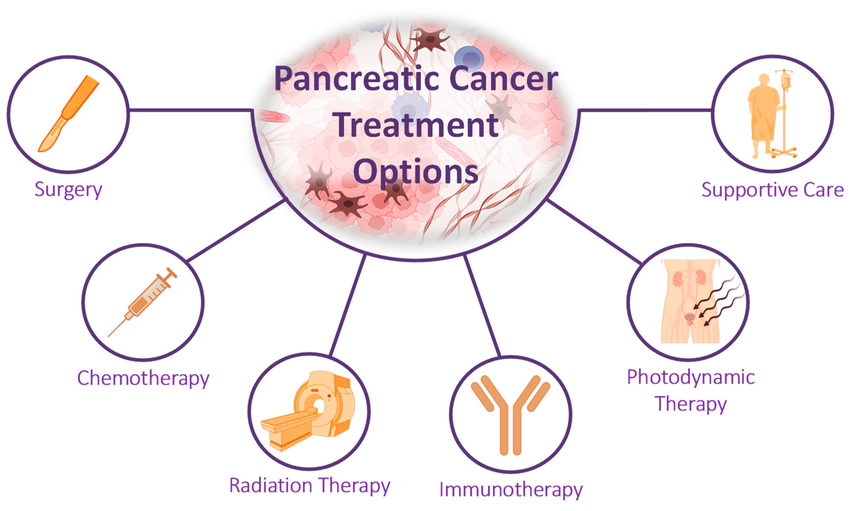
1. Surgical Treatments for Pancreatic Cancer
Surgery remains the most effective treatment for pancreatic cancer, especially if the cancer is diagnosed early. However, only a small percentage of patients are candidates for surgery due to the cancer's tendency to spread quickly.
Types of Surgical Procedures:
- Whipple Procedure (Pancreaticoduodenectomy): This is the most common surgery performed for pancreatic cancer and involves the removal of the pancreas’ head, the duodenum, part of the stomach, and other surrounding tissues.
- Distal Pancreatectomy: In cases where the cancer is located in the body or tail of the pancreas, this surgery involves the removal of the tail and/or body of the pancreas.
- Total Pancreatectomy: In rare cases, the entire pancreas may need to be removed, along with nearby tissues.
Benefits of Surgical Treatment:
- Potential for Cure: Surgery offers the potential for a cure, especially if the cancer has not spread to other parts of the body.
- Improved Quality of Life: Removing the tumor can alleviate pain and other symptoms associated with pancreatic cancer.
2. Chemotherapy: A Key Treatment for Pancreatic Cancer
Chemotherapy plays a critical role in the treatment of pancreatic cancer, particularly in advanced stages or after surgery to eliminate remaining cancer cells. New chemotherapy regimens and combinations have significantly improved outcomes.
Common Chemotherapy Drugs for Pancreatic Cancer:
- Gemcitabine: The most common chemotherapy drug for pancreatic cancer, often used as a first-line treatment.
- FOLFIRINOX: A combination of drugs that has shown effectiveness in treating advanced pancreatic cancer.
- Nab-paclitaxel (Abraxane): Often combined with gemcitabine for better results.
Benefits of Chemotherapy:
- Systemic Treatment: Chemotherapy targets cancer cells throughout the body, helping to treat cancer that has spread beyond the pancreas.
- Palliative Care: Chemotherapy can be used to reduce symptoms and improve quality of life, even in advanced stages.
3. Targeted Therapy: Precision Medicine for Pancreatic Cancer
Targeted therapy is a rapidly developing area in cancer treatment that involves targeting specific molecules involved in cancer growth. These therapies aim to stop cancer cells from growing without harming normal cells.
Types of Targeted Therapy:
- PARP Inhibitors: These drugs, such as olaparib, target cancer cells' ability to repair DNA damage, particularly in tumors with specific genetic mutations like BRCA mutations.
- EGFR Inhibitors: Epidermal growth factor receptor (EGFR) inhibitors block proteins on cancer cells that help them grow, potentially slowing tumor growth.
- VEGF Inhibitors: Vascular endothelial growth factor (VEGF) inhibitors prevent tumors from growing their own blood supply, limiting their ability to grow.
Benefits of Targeted Therapy:
- Fewer Side Effects: Targeted therapies are generally more selective and have fewer side effects compared to chemotherapy.
- Better Outcomes for Specific Genetic Mutations: Some treatments, such as PARP inhibitors, have shown promise in treating cancers with specific genetic mutations.
4. Immunotherapy: Boosting the Body’s Defenses
Immunotherapy is one of the most promising treatments in the fight against cancer. It works by stimulating the immune system to recognize and attack cancer cells more effectively. While still being tested, immunotherapy holds significant potential for pancreatic cancer treatment by 2025.
Types of Immunotherapy for Pancreatic Cancer:
- Checkpoint Inhibitors: Drugs like pembrolizumab (Keytruda) and nivolumab (Opdivo) are designed to block checkpoint proteins that prevent the immune system from attacking cancer cells.
- Cancer Vaccines: Vaccines designed to stimulate the immune system to recognize and target pancreatic cancer cells.
- Adoptive Cell Therapy: This involves collecting and enhancing a patient’s own immune cells to fight cancer.
Benefits of Immunotherapy:
- Long-Term Effectiveness: Immunotherapy has the potential for long-lasting effects, providing hope for patients with advanced stages.
- Targeted Action: These therapies specifically enhance the body’s immune response to cancer, causing fewer side effects than traditional treatments.
5. Radiation Therapy: Targeted Treatment for Tumors
Radiation therapy uses high-energy rays to kill or shrink tumors. It is often used in combination with other treatments, such as chemotherapy or surgery, for locally advanced pancreatic cancer.
Types of Radiation Therapy:
- External Beam Radiation: Directed from outside the body to the tumor site.
- Stereotactic Body Radiation Therapy (SBRT): A highly focused radiation treatment that targets the tumor more precisely, causing less damage to surrounding tissue.
Benefits of Radiation Therapy:
- Local Control: Radiation therapy can help control the tumor locally, preventing further spread and relieving symptoms like pain or obstruction.
- Non-Invasive: Unlike surgery, radiation therapy does not require incisions and is generally well-tolerated by patients.
Pancreatic Cancer Treatment Summary
| Treatment Type | Common Approaches/Drugs | Effectiveness | Side Effects |
|---|---|---|---|
| Surgery | Whipple Procedure, Distal Pancreatectomy | High for early-stage cancer | Pain, infection, recovery time |
| Chemotherapy | Gemcitabine, FOLFIRINOX, Nab-paclitaxel | Effective for advanced cancer | Nausea, fatigue, hair loss |
| Targeted Therapy | PARP Inhibitors, EGFR Inhibitors, VEGF Inhibitors | Effective for genetic mutations | Fatigue, skin reactions |
| Immunotherapy | Pembrolizumab (Keytruda), Nivolumab (Opdivo) | Promising for advanced cancer | Fatigue, rash |
| Radiation Therapy | External Beam, Stereotactic Radiation | Effective for local control | Fatigue, skin irritation |
In conclusion, pancreatic cancer treatment in 2025 will offer a more hopeful future for patients, thanks to advancements in therapies that target the root causes of cancer more effectively while minimizing side effects. With these innovations, better survival rates and improved quality of life are within reach for many patients.
Pancreatic Cancer Treatment in 2025: The Future is Bright
By 2025, pancreatic cancer treatment is set to become more personalized, less invasive, and more effective. Advances in genetic testing, precision medicine, and novel drug therapies will make treatments more targeted to the individual patient’s needs. Additionally, breakthroughs in liquid biopsies and early detection technologies could lead to earlier diagnoses, improving survival rates.
What Patients Can Expect in 2025:
- More Targeted and Personalized Treatments: With genomic profiling and biomarker testing, treatments will be tailored to the unique genetic profile of each patient’s cancer.
- Better Survival Rates: Thanks to immunotherapy and targeted therapies, survival rates will improve significantly, especially for patients with advanced pancreatic cancer.
- Minimally Invasive Options: Advances in robotic surgery and minimally invasive techniques will offer less pain, shorter recovery times, and better overall outcomes for patients.
Conclusion
Pancreatic cancer treatment is evolving rapidly. By 2025, innovative therapies such as immunotherapy, targeted therapy, and precision medicine will dramatically improve the prognosis for many patients. With continued advancements in early detection and genetic research, pancreatic cancer will no longer be the death sentence it once was. Patients and healthcare providers alike can look forward to a future of improved treatment options, better outcomes, and a higher quality of life for those diagnosed with this devastating disease.