'%20fill='%23ccc'/%3e%3c/svg%3e)

What Are Enterprise Applications and Tools?
Enterprise applications refer to large-scale software solutions designed to support and automate the operations of a business. These tools are built to manage the core functions of a company, ranging from finance and HR to customer relationship management (CRM) and supply chain operations. By centralizing and automating these processes, businesses can improve efficiency, reduce errors, and increase productivity across various departments.
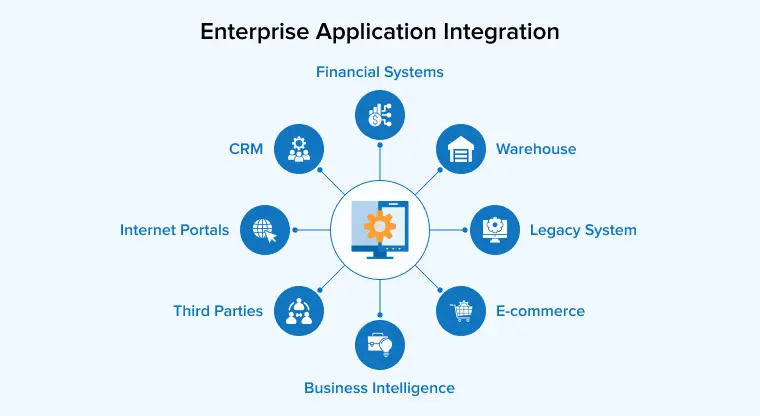
Enterprise tools are often integrated into the organization's Enterprise Resource Planning (ERP) systems, Customer Relationship Management (CRM) systems, or even specialized software designed for specific industries or functions.
Types of Enterprise Applications and Tools
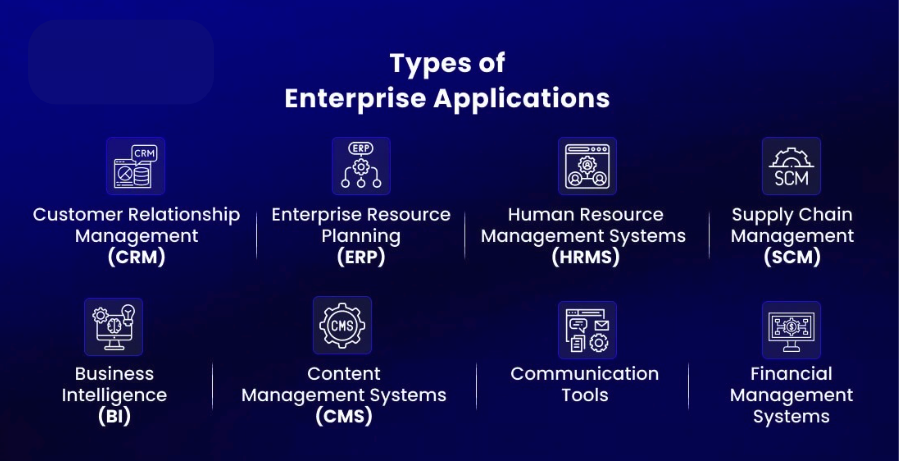
There are several key categories of enterprise applications that businesses rely on to streamline processes and manage day-to-day operations. Some of the most widely used types of enterprise software include:
1. Enterprise Resource Planning (ERP) Systems
ERP systems are one of the most important enterprise tools for integrating different business processes into a single unified system. These applications help businesses track everything from inventory and supply chain management to accounting and human resources.
Popular ERP Software:
- SAP
- Oracle ERP
- Microsoft Dynamics 365
2. Customer Relationship Management (CRM) Systems
CRM software is designed to manage a company's interactions with customers, clients, and sales prospects. By consolidating data across all customer touchpoints, businesses can improve customer service, increase sales, and enhance marketing efforts.
Popular CRM Software:
- Salesforce
- HubSpot
- Zoho CRM
3. Human Resource Management (HRM) Software
HRM software automates essential HR functions such as recruitment, payroll, performance management, and employee benefits. It provides businesses with better control over their workforce and ensures compliance with labor laws.
Popular HRM Software:
- Workday
- ADP Workforce Now
- BambooHR
4. Supply Chain Management (SCM) Systems
Supply chain management software helps businesses track and optimize the flow of goods and services, from raw materials to finished products. These tools are essential for maintaining product quality and reducing supply chain costs.
Popular SCM Software:
- SAP Integrated Business Planning
- Oracle SCM Cloud
- Infor Supply Chain Management
5. Business Intelligence (BI) Tools
BI tools are essential for analyzing business data and generating actionable insights that can guide decision-making. These tools provide reports, dashboards, and real-time analytics to help businesses monitor performance and make informed strategic choices.
Popular BI Tools:
- Tableau
- Microsoft Power BI
- Qlik Sense
Benefits of Enterprise Applications and Tools
Adopting the right enterprise applications and tools can have a significant impact on your business. Below are some of the key benefits:
1. Improved Efficiency
By automating repetitive tasks and integrating disparate systems, enterprise tools help businesses operate more efficiently. Employees can focus on higher-value tasks rather than manual data entry and process management.
2. Enhanced Collaboration
Many enterprise applications offer collaboration features, enabling teams to work together more seamlessly. For example, CRM and ERP systems provide shared access to customer data, project management tools, and key performance indicators (KPIs), allowing team members to collaborate more effectively.
3. Cost Reduction
Enterprise applications can help businesses identify inefficiencies, reduce errors, and streamline operations, leading to cost savings. Automation also reduces the need for manual labor, further lowering operational expenses.
4. Data-Driven Decision Making
With BI tools and integrated data management systems, businesses can analyze vast amounts of data in real time. This access to accurate, up-to-date information empowers decision-makers to make better, more informed business choices.
5. Scalability
As businesses grow, so do their needs. Many enterprise tools are highly scalable, meaning they can easily accommodate growth, whether in terms of users, processes, or geographic locations.
Top Enterprise Applications and Tools for 2025
Here’s a quick comparison of some of the leading enterprise applications and tools in 2025:
| Category | Top Enterprise Applications | Key Features | Price Range |
|---|---|---|---|
| ERP Systems | SAP, Oracle ERP, Microsoft Dynamics 365 | Integrated financials, inventory management | $100 - $300/user/month |
| CRM Systems | Salesforce, HubSpot, Zoho CRM | Customer insights, lead management | $25 - $150/user/month |
| HRM Software | Workday, ADP Workforce Now, BambooHR | Payroll, performance management, HR analytics | $50 - $200/user/month |
| SCM Systems | SAP Integrated Business Planning, Oracle SCM Cloud | Supply chain visibility, inventory tracking | Custom pricing (contact for quotes) |
| BI Tools | Tableau, Microsoft Power BI, Qlik Sense | Dashboards, real-time analytics | $15 - $100/user/month |
1. SAP ERP System
SAP remains a leader in the ERP space with its comprehensive solutions that integrate accounting, supply chain, HR, and customer data. SAP’s tools are ideal for large enterprises looking for scalable solutions.
2. Salesforce CRM
Salesforce is one of the most popular CRM systems globally, offering cloud-based solutions that help businesses manage customer relationships, track sales, and personalize marketing campaigns.
3. Workday HRM
Workday offers an intuitive HRM system that supports core HR functionalities, payroll, benefits management, and talent acquisition. Its advanced features make it suitable for mid-sized to large enterprises.
4. Tableau BI Tools
Tableau is renowned for its data visualization capabilities, allowing businesses to analyze large data sets and generate intuitive reports. It’s an essential tool for any company that wants to make data-driven decisions.
5. Oracle SCM Cloud
Oracle SCM Cloud helps businesses manage their supply chains with tools that streamline logistics, warehouse management, and order fulfillment. Its cloud-based design offers excellent scalability.
How to Choose the Right Enterprise Tools for Your Business
When selecting the right enterprise applications and tools, there are several factors to consider:
- Business Size: Larger businesses may need more robust solutions, while smaller companies may prefer lighter tools with fewer features.
- Integration: Ensure that the applications you choose can integrate with your existing systems.
- Customization: Look for tools that offer customization to meet the specific needs of your business.
- Customer Support: Consider the level of customer support provided by the vendor to ensure you can get help when needed.
Conclusion
Enterprise applications and tools are essential for businesses looking to enhance their operational efficiency, collaboration, and decision-making capabilities. By integrating ERP, CRM, HRM, and BI tools, businesses can streamline their workflows and make data-driven decisions that lead to long-term growth. As technology continues to evolve, staying ahead of the curve with the best enterprise applications will help you maintain a competitive edge in the marketplace.
Choose the right tools, optimize your operations, and unlock the full potential of your business in 2025 and beyond!